


Search behavior is shifting as more users turn to AI tools for direct answers, research, comparisons, and recommendations. Instead of relying only on traditional search engines, many users now ask questions inside AI tools and receive complete answers without clicking through websites.
This shift introduces a new discipline. Large Language Model SEO, often called LLM SEO, is the practice of structuring and publishing content so AI systems can understand it, trust it, and reuse it inside generated answers.
This is not a future trend. It is already affecting visibility, brand discovery, and traffic attribution. If your content is not optimized for large language models, users may still get answers to their questions, just not from you.
LLM SEO is closely related to Generative Engine Optimization. GEO is the broader strategy for improving brand visibility across AI-powered search and answer platforms, while LLM SEO focuses more specifically on how content is understood, cited, and reused by large language models.
What Is LLM SEO?
LLM SEO is the process of optimizing content so large language models can accurately interpret, summarize, and cite it when responding to user prompts.
Traditional SEO focuses on ranking web pages. LLM SEO focuses on becoming a trusted source inside AI-generated responses.
When someone asks an AI system a question, it may synthesize an answer from training data, retrieved sources, search indexes, or other trusted references depending on the platform. The goal of LLM SEO is to make your content one of the sources it confidently pulls from.
At a practical level, LLM SEO emphasizes clarity, structure, authority, and context.
LLM SEO vs Traditional SEO
LLM SEO builds on traditional SEO, but the priorities and success metrics are different.
Traditional SEO focuses on keyword rankings, organic traffic, and click-through rates. Optimization is centered on backlinks, technical performance, and on-page relevance.
LLM SEO focuses on citations, mentions, and visibility inside AI-generated answers. Optimization is centered on clear language, structured content, authority signals, and contextual completeness.
Ranking well does not guarantee AI visibility. A page can rank on page one and still never be referenced inside an AI answer.
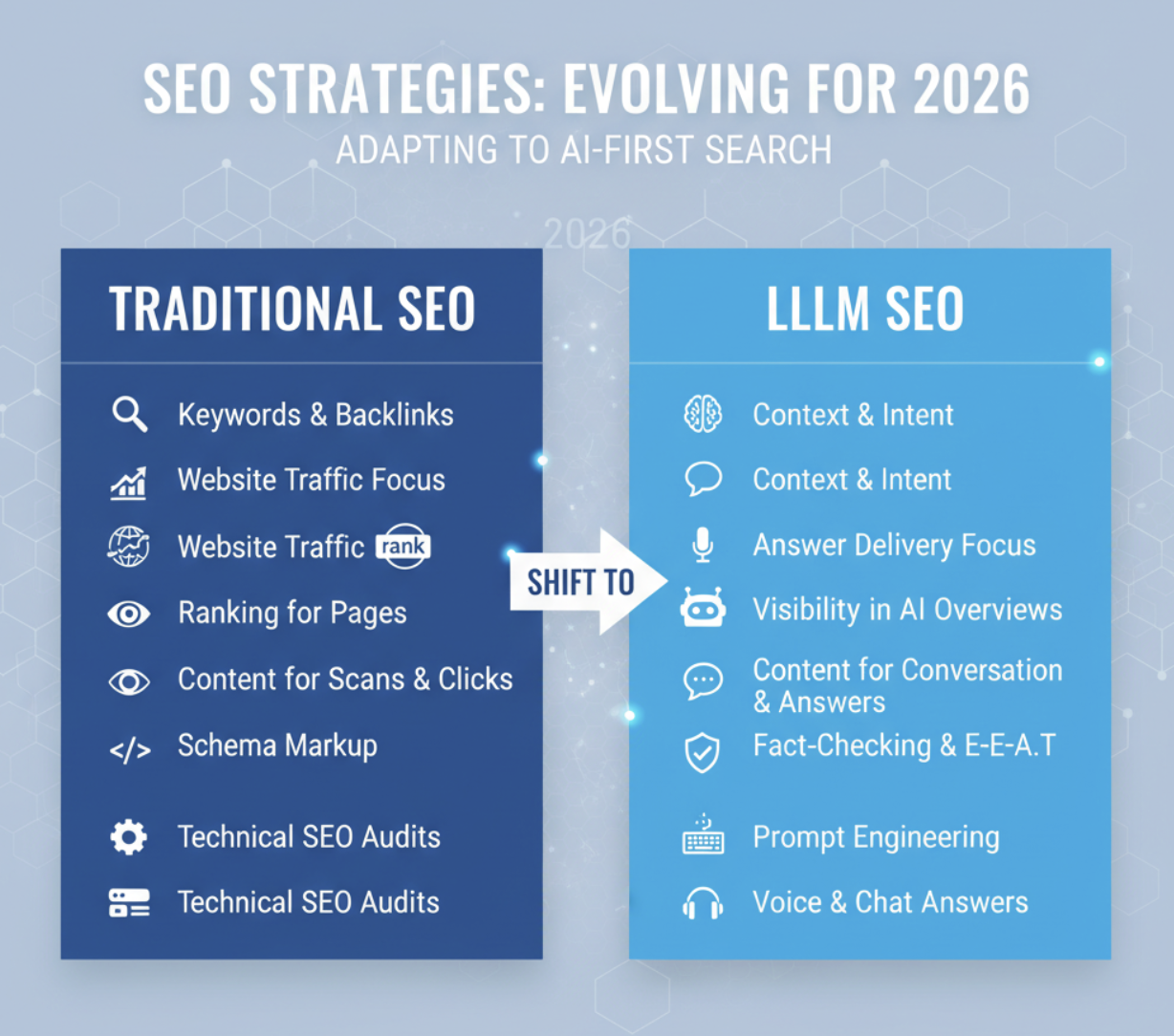 Traditional SEO vs LLM SEO
LLM SEO vs GEO and LLMO
LLM SEO, LLMO, and GEO are closely related terms, but they are not identical. LLM SEO focuses on optimizing content so large language models can interpret and reuse it. LLMO is often used to describe broader optimization for large language model environments. GEO, or Generative Engine Optimization, is the broader search marketing discipline focused on improving visibility across AI-powered search engines, answer engines, and generative platforms.
Why LLM SEO Matters Right Now
User behavior is shifting rapidly. Instead of searching, comparing results, and clicking links, many users now ask a single question and accept the synthesized answer.
This creates several risks for brands that rely only on traditional SEO.
First, ranking alone no longer guarantees visibility. Second, authority compounds faster inside AI systems. Once a source is trusted, it is reused across many related queries. Third, attribution is changing. Even without a click, brand mentions inside AI answers influence awareness and decision-making.
Brands that adapt early can build a compounding advantage.
How LLMs Evaluate and Reuse Content
Large language models do not think in terms of rankings or traffic. They evaluate content based on whether it helps them confidently answer a question without introducing ambiguity or contradiction.
When an AI system generates a response, it is synthesizing information from sources it considers reliable, clear, and contextually complete. That is why some pages are consistently referenced while others, even high-ranking ones, are ignored.
Clarity is the first filter. Content that defines concepts directly, avoids jargon, and answers questions without hedging is easier for models to reuse. If a definition requires interpretation, the model is less likely to quote or summarize it.
Structure comes next. Pages that use logical headings, short explanatory sections, and FAQs give AI systems obvious extraction points. This does not mean content should feel templated. It means the ideas should unfold in a predictable way, just as they would in a conversation with a knowledgeable expert.
Authority plays a larger role than many marketers realize. Large language models favor sources that demonstrate expertise over time. This includes clear authorship, consistent publishing patterns, and alignment between what a brand says on its own site and how it is referenced elsewhere online.
Context is what separates average content from content that gets reused. Pages that anticipate follow-up questions and answer them within the same article are more valuable to AI systems. Instead of forcing the model to stitch together multiple sources, you make its job easier by solving the full intent in one place.
In practice, this means LLM SEO is less about optimization tricks and more about publishing content that feels complete, confident, and genuinely useful. When a page reads like it was written to help someone understand a topic, not to rank for it, AI systems respond accordingly.
What LLM SEO Can Include
LLM SEO can include content restructuring, entity optimization, schema markup, internal linking, topical authority development, source and citation building, reputation asset improvement, and testing how a brand appears across AI-powered platforms.
For SEO Image, this work often connects with traditional SEO, technical SEO, content strategy, GEO, and online reputation management because AI visibility depends on the full ecosystem of signals around a brand.
Best Practices for LLM SEO
Write for Questions, Not Keywords
AI systems are trained on natural language. Content that mirrors how people actually ask questions performs better than rigid keyword-focused writing.
Focus on explaining what something is, why it matters, how it works, and when it applies.
Use Explicit Structure
Well-structured content is easier for AI systems to understand and reuse.
Use clear headings, short paragraphs, FAQs, and concise summaries. These act as extraction points for AI-generated answers.
Publish Original Insights and Data
Original research, firsthand experience, and proprietary frameworks significantly increase the likelihood of being cited.
AI systems prioritize information that adds value beyond generic summaries.
Reinforce Brand and Author Authority
Consistency matters. Clear authorship, aligned messaging across your site, and external mentions reinforce trust.
Authority is built across an ecosystem, not a single page.
Keep Content Fresh
Outdated examples and statistics reduce credibility. Regular updates signal accuracy and relevance.
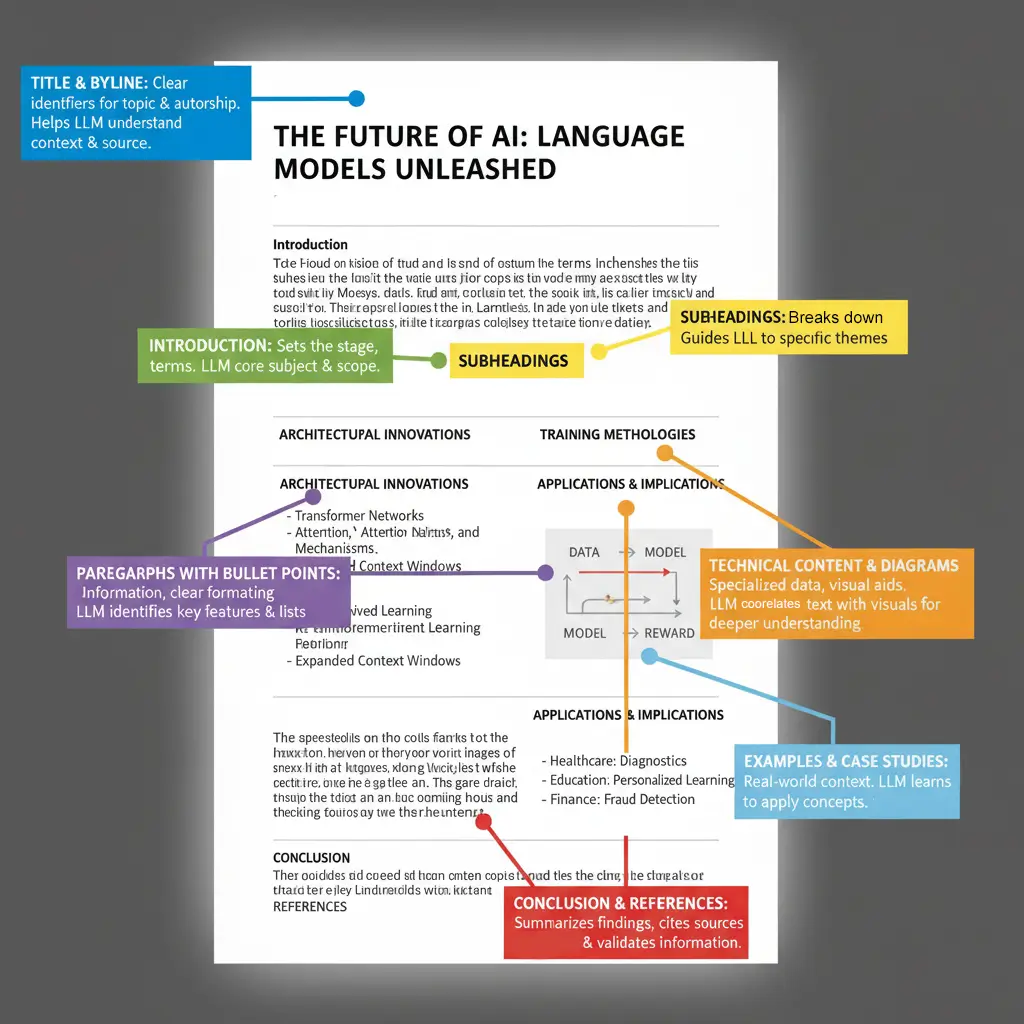
How structured code and schema help LLMs understand content
Measuring LLM SEO Performance
LLM SEO cannot be measured by rankings alone.
Key signals include brand mentions inside AI answers, citations or links from AI tools, referral traffic from AI platforms, and visibility inside AI-generated summaries.
Manual testing is essential. Ask AI systems the same questions your audience asks and document how your brand appears over time.
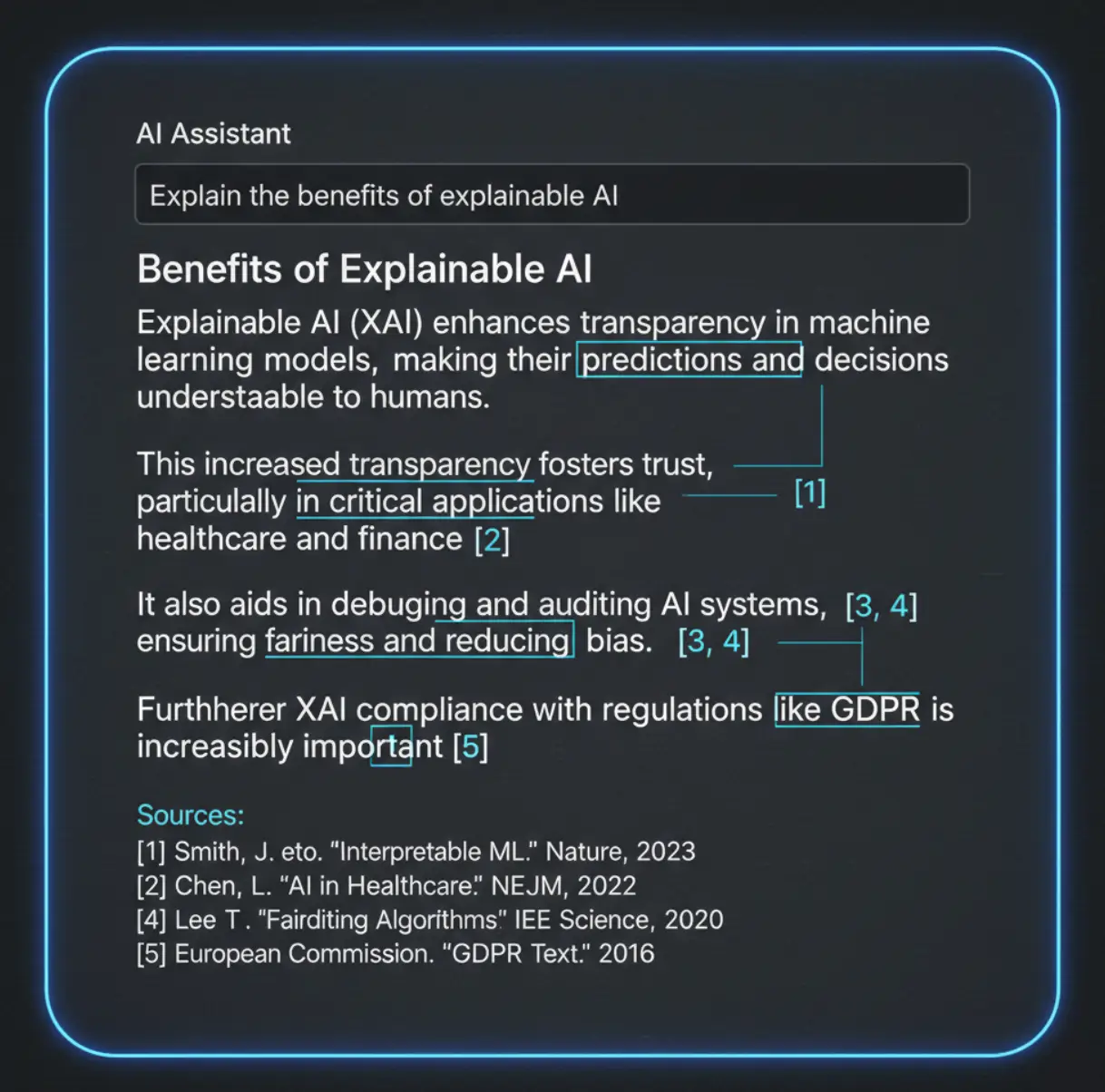
How Brands Can Prepare for AI Search
Large language models are changing how people discover information. Users increasingly expect direct answers instead of lists of search results.
LLM SEO is how brands stay visible in this environment.
By writing clearly, structuring content intentionally, publishing original insights, and reinforcing authority, you position your content to be reused by AI systems where attention is moving.
Brands that adapt now can improve their chances of being referenced, cited, and remembered as AI search continues to grow.
For more on AI SEO and Generative Engine Optimization, read our Definitive Guide to Generative Engine Optimization.
LLM SEO Services for Search and AI Visibility
SEO Image helps brands connect traditional SEO, GEO, entity optimization, schema, content strategy, and online reputation management so they can compete across Google, AI Overviews, ChatGPT, Perplexity, Gemini, and other AI-powered discovery platforms.
Frequently Asked Questions About LLM SEO
What is LLM SEO?
LLM SEO is the practice of optimizing content so large language models can clearly understand it, trust it, and reuse it inside AI-generated answers. Instead of focusing only on search rankings, LLM SEO focuses on being cited or referenced when users ask questions inside AI tools.
How do large language models choose which content to cite?
Large language models prioritize content that is clearly written, well structured, authoritative, and contextually complete. Pages that directly answer questions, use logical headings, include FAQs, and demonstrate real expertise are more likely to be reused in AI responses.
How is LLM SEO different from traditional SEO?
Traditional SEO focuses on ranking web pages in search engine results and driving clicks. LLM SEO focuses on being included in AI generated answers, even when no click occurs. Success is measured by mentions, citations, and brand visibility inside AI tools.
Is LLM SEO the same as optimizing for AI Overviews?
No, but they are closely related. Optimizing for AI Overviews is a subset of LLM SEO. LLM SEO applies more broadly to AI tools beyond search engines, including conversational assistants and research-focused AI platforms.
What types of content perform best for LLM SEO?
Content that performs best for LLM SEO is educational, structured, and intent driven. Explainers, guides, definitions, comparisons, and FAQ based content tend to be cited more often than promotional or sales focused pages.
Do keywords still matter for LLM SEO?
Keywords still matter, but exact match optimization is less important. LLMs rely more on semantic understanding and natural language. Content should reflect how people actually ask questions rather than forcing keyword repetition.
Does schema markup help with LLM SEO?
Schema markup helps clarify content structure and context, which can support LLM interpretation. Article schema and FAQ schema are especially useful, but schema alone is not enough without clear, high quality content.
Can LLM SEO drive traffic if AI answers reduce clicks?
Yes. While some AI answers result in zero click searches, brand mentions inside AI responses increase awareness, trust, and downstream conversions. Many AI tools also provide source links that drive qualified referral traffic.
How do you measure LLM SEO success?
LLM SEO success is measured by brand mentions inside AI answers, citations or links from AI tools, visibility in AI Overviews, and referral traffic from AI platforms. Manual testing and monitoring are essential.
How long does it take to see results from LLM SEO?
LLM SEO results compound over time. As AI systems repeatedly encounter and trust a source, it is more likely to be reused across related questions. Early optimization provides a long term advantage.
Is LLM SEO only for large brands?
No. Smaller brands and niche experts often perform well in LLM SEO because they can publish focused, high clarity content that directly answers specific questions. Authority is based on expertise, not company size.
Can existing content be optimized for LLM SEO?
Yes. Existing content can often be improved by adding clearer definitions, restructuring headings, inserting FAQs, updating examples, and tightening explanations. LLM SEO does not require starting from scratch.